Executive Summary
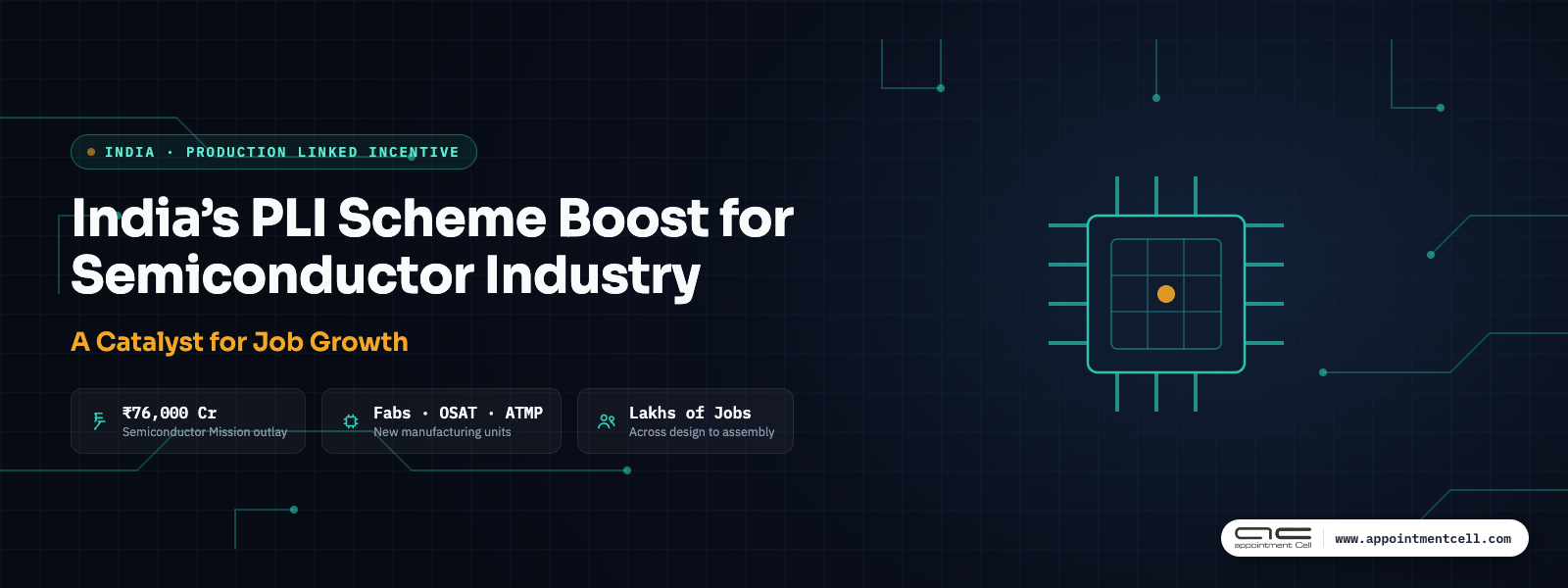
The Indian government has introduced a new incentive under the Production Linked Incentive (PLI) scheme, focusing on boosting the semiconductor industry. This strategic move aims to enhance domestic manufacturing capabilities, reduce reliance on imports, and generate significant job opportunities in the electronics and engineering sectors. The initiative is expected to create millions of jobs over the next few years, with substantial impacts on employment and economic growth.
Background
The semiconductor industry is a critical component of modern technology, and India's heavy reliance on imports has been a longstanding challenge. The new PLI scheme is designed to incentivize local production, reduce import dependency, and strengthen India's position in the global semiconductor market.
Industry Analysis
The semiconductor industry stands to gain significantly, with increased investments expected in manufacturing facilities. Sectors like consumer electronics, automotive, and telecommunications will likely experience growth due to improved local supply chains and reduced costs.
Employment Impact
The initiative is anticipated to create numerous job opportunities in manufacturing, research and development, and supply chain management. Cities with existing technology hubs, such as Bengaluru, Hyderabad, and Pune, are likely to see increased demand. Salary trends are expected to rise as competition for skilled workers intensifies.
Skills in Demand
- Semiconductor Manufacturing — High priority — Suitable for: Engineers, Technicians
- Electronics Design — High priority — Suitable for: Design Engineers, R&D Specialists
- Supply Chain Management — Medium priority — Suitable for: Logistics Professionals
- Quality Control — Medium priority — Suitable for: Quality Analysts
- Project Management — Medium priority — Suitable for: Project Managers
Career Opportunities
- Semiconductor Process Engineer: Focuses on the development and optimization of semiconductor manufacturing processes.
- Electronics Design Engineer: Specializes in the design and development of electronic components and systems.
- Quality Assurance Specialist: Ensures product quality meets industry standards and customer expectations.
- Supply Chain Analyst: Manages the flow of goods and materials, optimizing supply chain efficiency.
- Research Scientist: Conducts research to innovate and improve semiconductor technologies.
- Manufacturing Technician: Operates and maintains semiconductor fabrication equipment.
- Project Manager: Oversees semiconductor manufacturing projects, ensuring timely delivery and budget adherence.
- Test Engineer: Develops and executes tests to ensure the functionality and reliability of semiconductor components.
- Logistics Manager: Coordinates the transportation and storage of semiconductor products.
- Data Analyst: Analyzes data to improve manufacturing processes and product quality.
Companies Likely to Benefit
Major technology companies with semiconductor divisions, such as Tata Electronics, Reliance Industries, and foreign firms with Indian operations like Intel and Samsung, are poised to benefit from the PLI scheme.
Government Initiatives
The PLI scheme complements other government initiatives like Skill India and Make in India, aiming to enhance the skill set of the workforce and boost domestic production capabilities.
Challenges
Potential challenges include skill gaps in the workforce, risk of automation reducing job numbers, intense global competition, and policy uncertainties that may affect investment inflows.
What Professionals Should Do
Students: Focus on courses in electronics and semiconductor technology.
Freshers: Seek internships in semiconductor companies to gain practical experience.
Experienced Professionals: Upskill in advanced semiconductor technologies and project management.
Recruiters: Identify and connect with talent skilled in semiconductor manufacturing and R&D.
Employers: Invest in employee training programs and collaborate with academic institutions for talent development.
Key Takeaways
- The PLI scheme is a strategic move to boost India's semiconductor industry.
- Millions of job opportunities are expected in electronics and engineering fields.
- Technology hubs like Bengaluru and Hyderabad will see increased hiring.
- Skills in semiconductor manufacturing and design are in high demand.
- Companies like Tata Electronics and Intel are set to benefit.
- Challenges include skill gaps and policy uncertainties.
- Government initiatives like Make in India support this growth.
Frequently Asked Questions
Q: What is the PLI scheme?
A: The Production Linked Incentive (PLI) scheme is a government initiative to boost domestic manufacturing by providing financial incentives to companies.
Q: How will the PLI scheme affect the semiconductor industry?
A: It aims to enhance domestic manufacturing capabilities, reduce import dependency, and create job opportunities in the sector.
Q: What skills are in demand due to this initiative?
A: Skills in semiconductor manufacturing, electronics design, and supply chain management are highly sought after.
Q: Which cities will see increased job opportunities?
A: Technology hubs like Bengaluru, Hyderabad, and Pune are likely to experience a rise in job demand.
Q: What are the challenges facing the semiconductor industry in India?
A: Key challenges include skill gaps, automation risks, and global competition.
Q: How can professionals prepare for opportunities in this field?
A: By upskilling in relevant technologies, pursuing internships, and leveraging government training programs.
Conclusion
The PLI scheme's focus on the semiconductor industry represents a pivotal moment for India's technology sector, promising to reduce import dependency and foster significant job growth. As the country positions itself as a global semiconductor hub, the initiative's success will depend on addressing skill gaps and navigating policy uncertainties.
Career Pulse Insight
The introduction of the PLI scheme for the semiconductor industry is a significant development for India's workforce, offering a pathway to enhanced manufacturing capabilities and robust job creation in high-tech sectors. This move aligns with India's broader economic strategies to become self-reliant and competitive on the global stage.
Related Careers
- Semiconductor Process Engineer
- Electronics Design Engineer
- Quality Assurance Specialist
- Supply Chain Analyst
- Research Scientist
- Manufacturing Technician
- Project Manager
- Test Engineer
Suggested Skills
- Semiconductor Manufacturing
- Electronics Design
- Supply Chain Management
- Quality Control
- Project Management
- Data Analysis
- Research and Development
- Automation Skills
- Problem-Solving
- Technical Writing
Related Industries
- Semiconductor Manufacturing
- Consumer Electronics
- Automotive
- Telecommunications
- Information Technology
- Logistics
Explore more career insights, recruitment trends, and job opportunities at AppointmentCell.com.