Executive Summary
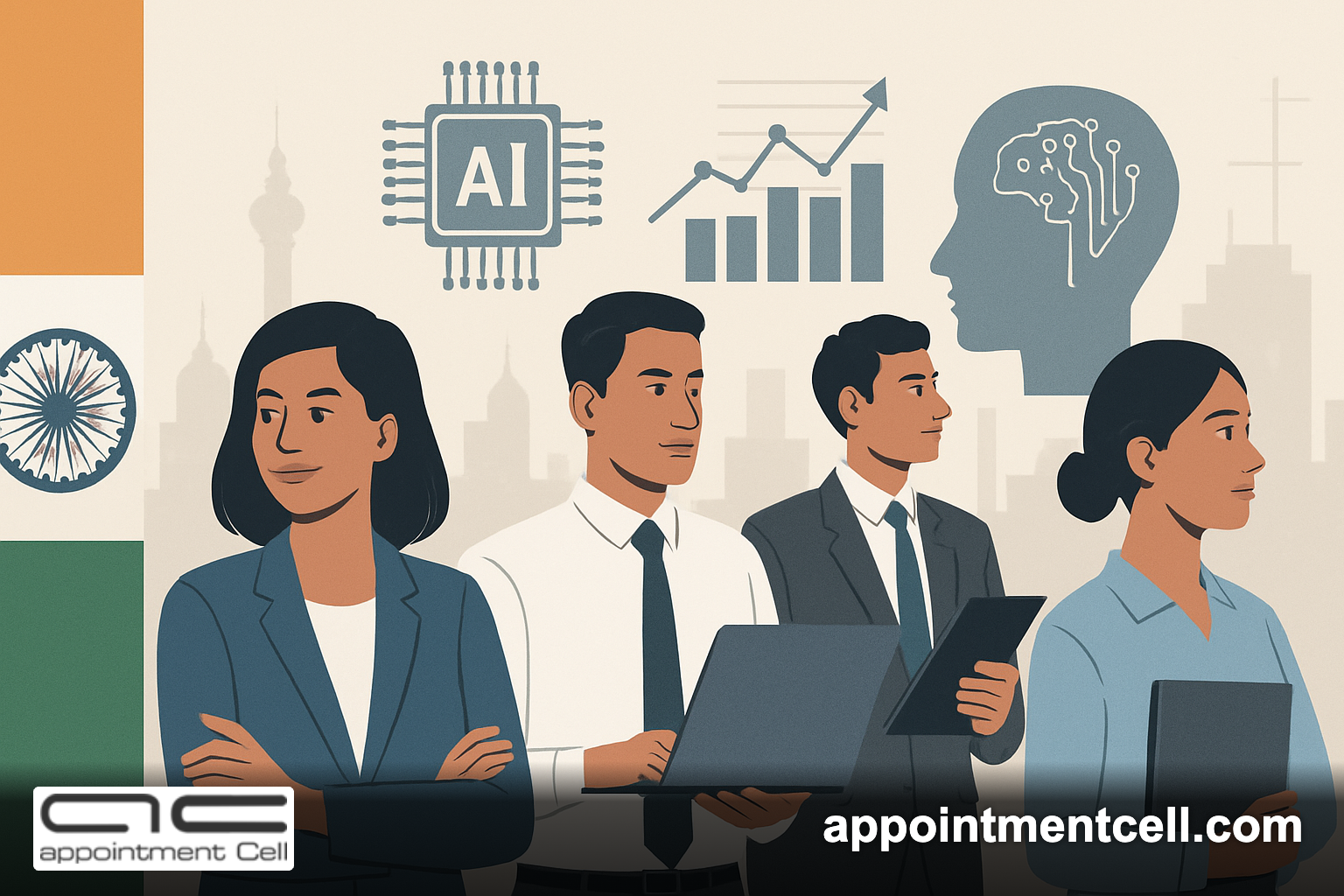
The Indian government's recent update to its National AI Strategy aims to integrate artificial intelligence across crucial sectors such as agriculture, education, and governance, thereby enhancing efficiency and innovation. This strategic push is expected to significantly increase the demand for AI professionals, data scientists, and machine learning experts as organizations seek to leverage these technologies. The employment impact is substantial, with a potential rise in hiring for AI-related roles across various industries.
Background
India has been progressively advancing its AI capabilities, recognizing the transformative potential of AI technologies. The updated National AI Strategy underscores the government's commitment to embedding AI into key sectors to drive socio-economic growth and enhance public service delivery. This initiative is part of a broader vision to position India as a global leader in AI research and application.
Industry Analysis
The integration of AI is poised to benefit several industries. In agriculture, AI can optimize crop management and yield predictions. The education sector can leverage AI for personalized learning experiences, while governance can utilize AI for efficient data management and decision-making processes. Sectors like healthcare, finance, and manufacturing are also likely to see growth as AI technologies become more entrenched in their operational frameworks.
Employment Impact
The demand for AI professionals is expected to surge, with roles in AI development, data science, and machine learning becoming increasingly valuable. Cities like Bengaluru, Hyderabad, and Pune are likely to see heightened demand for these roles due to their established tech ecosystems. Salary trends for AI-related positions are expected to see an upward trajectory as the competition for skilled talent intensifies. Organizations are projected to ramp up hiring in the next 6-12 months.
Skills in Demand
- Machine Learning — High priority — Suitable for: Machine Learning Engineer, Data Scientist
- Data Analysis — High priority — Suitable for: Data Analyst, Business Intelligence Analyst
- Natural Language Processing — Medium priority — Suitable for: NLP Specialist, AI Researcher
- Deep Learning — High priority — Suitable for: AI Engineer, Research Scientist
- Python Programming — High priority — Suitable for: Software Developer, Data Scientist
- Cloud Computing — Medium priority — Suitable for: Cloud Engineer, AI Architect
- AI Ethics — Low priority — Suitable for: AI Policy Advisor, Compliance Officer
Career Opportunities
The following roles are expected to be in high demand:
- Machine Learning Engineer — Develops algorithms and models for AI applications.
- Data Scientist — Analyzes complex data sets to derive actionable insights.
- AI Research Scientist — Conducts research to advance AI technologies.
- AI Product Manager — Oversees AI product development and implementation.
- NLP Specialist — Focuses on language processing technologies.
- Data Analyst — Interprets data to inform business decisions.
- AI Architect — Designs AI systems and solutions.
- AI Policy Advisor — Provides guidance on AI ethics and regulations.
- Cloud Engineer — Manages cloud infrastructure for AI solutions.
- AI Solutions Developer — Creates end-to-end AI solutions for businesses.
Companies Likely to Benefit
Companies such as Infosys, TCS, Wipro, IBM India, and Accenture are well-positioned to capitalize on the growing need for AI-driven solutions. These organizations have already invested in AI capabilities and are likely to expand their workforce to meet increasing demand.
Government Initiatives
The Indian government supports AI integration through initiatives like Digital India and the National AI Portal, which aim to foster AI education and research. These initiatives provide a conducive environment for the growth of AI professionals.
Challenges
Despite the opportunities, challenges such as skill gaps, high competition for top talent, and the potential for job displacement due to automation remain. Additionally, policy uncertainties and ethical considerations regarding AI usage could pose hurdles.
What Professionals Should Do
Students: Focus on courses in AI and data science to build foundational skills.
Freshers: Gain practical experience through internships and projects in AI-related fields.
Experienced Professionals: Upskill in advanced AI technologies and consider certifications to remain competitive.
Recruiters: Develop strategies to attract and retain AI talent, emphasizing career growth opportunities.
Employers: Invest in training programs to bridge skill gaps and foster a culture of continuous learning.
Key Takeaways
- India's updated AI strategy is spurring demand for AI professionals across sectors.
- AI integration offers growth opportunities in agriculture, education, and governance.
- Expect increased hiring in AI roles, particularly in tech hubs like Bengaluru and Hyderabad.
- Key skills include machine learning, data analysis, and deep learning.
- Government initiatives support AI education and research.
- Challenges include skill gaps, competition, and policy uncertainties.
Frequently Asked Questions
Q: What sectors are most affected by India's AI strategy update?
A: Agriculture, education, and governance are key sectors, with impacts also felt in healthcare, finance, and manufacturing.
Q: What roles are in demand due to the AI strategy update?
A: Roles such as AI Engineer, Data Scientist, and Machine Learning Engineer are in high demand.
Q: How can professionals prepare for careers in AI?
A: Professionals should focus on acquiring skills in machine learning, data analysis, and Python programming.
Q: What challenges exist in the AI job market?
A: Challenges include skill gaps, competition for talent, and potential job displacement due to automation.
Q: How do government initiatives support AI integration?
A: Initiatives like Digital India and the National AI Portal facilitate AI education and research, promoting workforce development.
Q: Where is AI talent demand highest in India?
A: Demand is highest in tech hubs such as Bengaluru, Hyderabad, and Pune.
Conclusion
The Indian government's updated National AI Strategy sets a promising stage for AI integration across various sectors, creating new opportunities for professionals in the field. As industries increasingly adopt AI technologies, the need for skilled professionals to drive innovation and improve efficiency will continue to grow. Addressing challenges such as skill gaps and policy uncertainties will be crucial to fully realizing AI's potential in India's socio-economic landscape.
Career Pulse Insight
The surge in AI integration across vital sectors highlights a significant shift in India's employment landscape, emphasizing the importance of upskilling and strategic workforce planning. As businesses and government entities embrace AI, the demand for skilled professionals in this domain is set to grow, offering new career pathways and opportunities for innovation.
Related Careers
- Data Analyst
- Machine Learning Engineer
- AI Research Scientist
- NLP Specialist
- AI Product Manager
- Cloud Engineer
- AI Solutions Developer
- AI Policy Advisor
Suggested Skills
- Machine Learning
- Data Analysis
- Python Programming
- Deep Learning
- Cloud Computing
- Natural Language Processing
- AI Ethics
- Data Visualization
- Problem Solving
- Critical Thinking
Related Industries
- Agriculture
- Education
- Governance
- Healthcare
- Finance
- Manufacturing
Explore more career insights, recruitment trends, and job opportunities at AppointmentCell.com.